

Gilts have featured prominently in financial news of late, but how much do you really know about how they operate? As key components of the broader financial ecosystem, understanding gilts is essential for every well-informed investor.
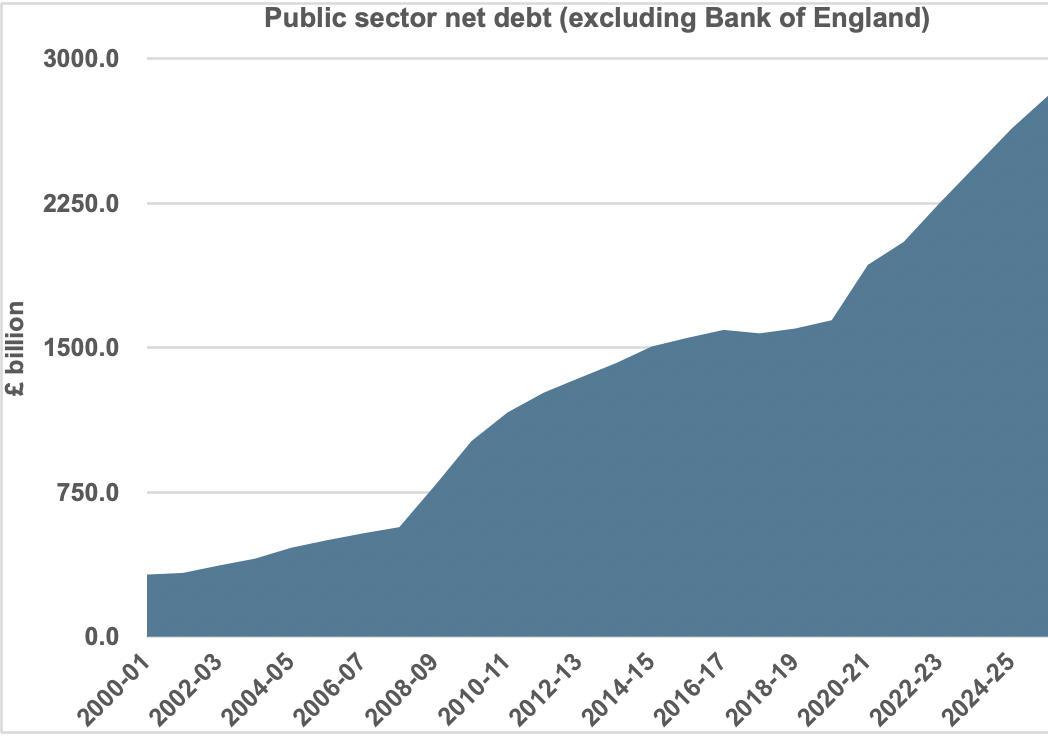
(Source: OBR)
What Are UK Gilts?
Gilts, or UK government bonds as they are formally known, are essentially loans made to the UK government by a wide variety of investors—ranging from everyday individuals to major overseas central banks.
When investors purchase gilts, they are lending money to the government in exchange for:
-
A regular, half-yearly income stream for a fixed term.
-
A final capital lump-sum repayment when the bond reaches the end of its term (maturity).
The gilts market has expanded dramatically in recent years. Today, the total value of the UK gilts market exceeds £2,900 billion—representing a massive 93.5% increase compared to ten years ago.
The Two Main Types of Gilts
The UK government issues two main categories of gilts to raise capital, each structured to meet different investor requirements.
Conventional Gilts
Conventional gilts represent roughly three-quarters of the entire gilt market by value. These bonds pay a fixed level of interest every six months and return a fixed lump sum at maturity.
Example: A £100 nominal holding of 4.5% Treasury Gilt 2035 pays £2.25 on 31 January and 31 July each year, followed by the £100 principal payment upon maturity on 31 July 2035.
Index-Linked Gilts
With index-linked gilts, both the interest payments and the final maturity value adjust in line with the Retail Prices Index (RPI). Although index-linked bonds offer built-in inflation protection, the HM Treasury currently issues mostly conventional gilts.
How the Government Uses Gilts to Borrow
Gilts serve as the primary mechanism for HM Treasury to bridge the fiscal gap between government expenditure and taxation receipts.
-
2026/27 Borrowing Target: HM Treasury aims to sell nearly £250 billion in gilts to investors.
-
Refinancing Needs: Of that total, roughly £140 billion is allocated simply to pay off existing gilts reaching their fixed term—a process referred to in financial jargon as “refinancing.”
Why Rising Gilt Rates Worry Chancellors
Servicing the interest on nearly £3 trillion of outstanding gilts represents a major annual expense for the government. The Office for Budget Responsibility (OBR) estimates that the net interest bill for 2026/27 will reach almost £110 billion.
To put that figure into perspective, debt interest accounts for:
-
Nearly 8% of all total government expenditure.
-
Almost one-third of the UK’s day-to-day welfare budget.
When gilt yields rise, the government is forced to pay a higher interest rate to sell new debt, placing immediate pressure on public finances.
How Gilt Yields Impact Everyday Investors
When the Treasury is forced to offer higher interest rates on gilts, the ripple effects extend far beyond Whitehall:
-
Borrowing Costs: Higher gilt yields frequently translate into higher fixed-rate mortgage prices for home buyers and existing homeowners.
-
Investment Opportunities: On the flip side, higher yields make gilt and bond funds increasingly attractive for income-seeking investors looking for stable returns.
Speak to Chartwell Wealth Management
Whether you are looking to build a resilient income portfolio or navigate the broader implications of shifting interest rates, expert financial guidance is essential. At Chartwell Wealth Management, our experienced advisers can help you construct a balanced portfolio tailored to your attitude to risk and financial objectives. Contact Chartwell Wealth Management today to discuss your investment strategy with a professional.
Important Information: The value of investments and the income from them can fall as well as rise and investors may not get back what they originally invested. Tax treatment varies according to individual circumstances and is subject to change. The Financial Conduct Authority does not regulate tax advice.